
UK mobile casinos that accept phone-credit deposits
 Available in GB
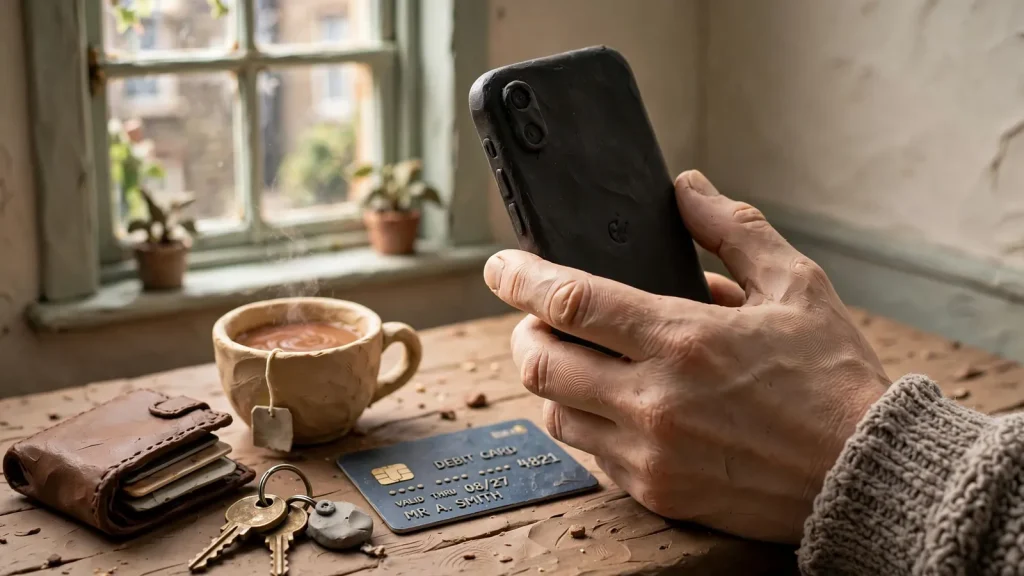
Phone-credit payments use a mobile network account, with charges added to a bill or deducted from pay-as-you-go credit.
How phone-credit deposits fit into the UK mobile casino payment mix
When you fund a mobile casino account, the payment method changes more than the button you press. It determines where the money is taken from, what information you enter, how the transaction is authorised and where the payment record appears afterwards.
Pay by Phone sits alongside card payments, e-wallets and bank-based methods, but it uses a different source of funds. Instead of taking money directly from a bank card or an online wallet, the transaction is linked to your mobile network account. The charge can appear on your next mobile phone bill or reduce the credit on a pay-as-you-go service. That makes phone-credit deposits relevant to players looking for mobile casinos that accept payment from phone credit, but it also means the mobile operator becomes part of the payment chain.
The key distinction is between a funding source and the device used to access the casino. You can open a casino in a phone browser and pay with a debit card. You can also use a mobile app and pay with an e-wallet. Neither payment is a phone-credit deposit merely because the transaction was made on a handset. “Pay by Phone” describes how the deposit is charged, not where you happen to be playing.
Pay by Phone compared with cards
A debit card connects the casino account to your bank account through the card network. You normally enter or select card details, confirm the transaction, and wait for the casino balance to update. A specialist review found that debit-card deposits were generally instant, although some banks flagged casino transactions for additional checks. The possible interruption therefore comes from the bank’s fraud or merchant controls rather than from the phone itself.
Phone-credit payment removes the debit-card step. The relevant balance is the mobile account or the bill associated with the phone number. This can be useful if you do not want to enter card details into the casino payment screen, but the charge is still a gambling transaction and remains subject to the operator’s checks and account controls. It is not a way to bypass age verification, identity checks or financial limits.
Keno Online Casinos in the UK: How to Compare
Credit cards are not an alternative for gambling deposits in Britain. Remote operators cannot accept credit-card gambling payments, including arrangements where a money service is used to fund the transaction. A wallet also cannot be used for gambling if its balance is funded by a credit card. A debit card and Pay by Phone therefore occupy different positions from a prohibited credit-card deposit: one draws from an available bank balance, while the other is charged through the mobile network.
Pay by Phone compared with wallets
An e-wallet places an intermediary between your bank and the mobile casino. PayPal is an example of this route. The casino sends the payment request to the wallet, and the wallet confirms it using its own login or security process. A specialist review recorded instant Apple Pay deposits in tested apps after two taps; that observation describes those tested apps, not every casino or every device.
Wallets can also introduce a currency issue. If the casino account uses a currency other than GBP, PayPal currency-conversion fees may apply. A phone-credit deposit does not operate through that particular wallet-conversion step, but its cost is instead connected to how the mobile operator bills the transaction. The two methods therefore move possible charges to different points in the payment process.
Bonus-buy slots in the UK: how bonus buys work
The practical difference is also visible in records. A wallet shows the transaction in the wallet account, while Pay by Phone appears through your mobile billing arrangement. This matters when you reconcile spending: checking only a bank statement may not show a phone-credit deposit in the same way as a card payment.
Pay by Phone compared with bank-based payments
Open Banking and bank transfers connect the casino to your bank rather than to your mobile account. They require bank authorisation and may involve an additional verification screen. The payment is recorded through the bank, so you can identify it in your banking history rather than through a phone bill or pay-as-you-go balance.
The choice is therefore about the control point. With a debit card, the bank approves the card transaction. With an e-wallet, the wallet authorises it. With Open Banking, the bank account confirms the payment directly. With Pay by Phone, the mobile network accounts for the charge. The casino still has to credit the gambling account and apply its own controls in each case.
DO
- Verify the operator’s UK licence number on the UKGC register.
- Check the specific payment methods available in your account.
- Confirm the transaction limits for Pay by Phone.
DON’T
- Assume every mobile casino supports phone-credit deposits.
- Treat the mobile app compatibility as proof of payment method support.
- Assume the deposit amount is the same as the mobile network charge.
What to compare before selecting a route
First, check that the mobile casino holds a current UK licence. You can find the operator’s licence number at the bottom of its homepage and verify it on the UKGC register. Online gambling is legal for adults aged 18 and over when the operator holds the required UK Gambling Commission licence.
Next, check the payment screen rather than assuming that every mobile casino supports every route. A phone being compatible with an app does not mean that Pay by Phone is available. The same applies to Apple Pay, PayPal, debit cards and bank-based options.
Deposit size can also differ between methods. A specialist review found that most mobile casino apps accepted a minimum deposit of £5, while some accepted £2. Pay by Phone may have a separate transaction ceiling, so the amount displayed for a card or wallet should not be treated as evidence of what the mobile network route accepts.
freesignupbonuscasino.com is an affiliate publisher and may receive payment if you follow a link and deposit. That does not change the need to check the operator’s UK licence, the payment method shown in your account and the charge that will reach your mobile bill or phone-credit balance.
Fastest Payout Online Casino UK: How to Judge Claims
Recommended online casinos
- JetsetspinsBonus: 200% Bonus + 100 Free Spins + Free Royal Wheel · Payout speed: 1-3 business days
- WinBeastBonus: €5000 + 500 FS + €650 Freebet · Payout speed: 1-3 business days
- BritsinoBonus: Welcome Package – Get your £2,200 + 2,000 FS · Payout speed: 1-3 business days
- BeOnBetBonus: 100% up to €500 + 100 FS · Payout speed: 1-3 business days
- ChanzeBonus: Slots Welcome Bonus #1 200% up to €500 · Payout speed: 1-3 business days
- SpinFormulaBonus: 550% Up To £15,000 + 550 FS · Payout speed: 1-3 business days
- x3betBonus: Welcome Pack 100% Up to £1.000 + 200 Free Spins · Payout speed: 1-3 business days
- AmunbetBonus: Join now and get 450% up to 2,700 GBP + 450 FS · Payout speed: 1-3 business days
- SlotoSportBonus: 500% up to £ 10 200+ 777 FS · Payout speed: 1-3 business days
What paying with phone credit can—and cannot—do
A Pay by Phone deposit is a funding route for your mobile casino account. It moves value from your mobile account into the casino balance so that you can use that balance for real-money play. It does not turn your phone number into a complete banking account, and it does not replace every payment function that may be available at the casino.
That distinction matters because the words “pay with phone credit” can suggest a wider service than the method actually provides. In practice, the phone account is used at the deposit stage. The casino records the payment, credits the gambling account, and treats the resulting balance in the same way as other deposited funds when you start playing. The method is therefore about getting money into the account, not about managing every later movement of money.
What the method actually funds
When a casino supports Pay by Phone, you select that route during the deposit process and authorise the charge through the mobile payment flow. The amount is then associated with your mobile account rather than being taken directly from a bank card or an e-wallet balance. With pay-as-you-go service, the value comes from the available phone credit. With a billed mobile service, the charge appears on the next mobile phone bill.
With a pay-as-you-go service, the value comes from your available phone credit, while with a billed mobile service, the charge appears on your next mobile phone bill.
Once the casino balance has been credited, the balance itself is what you use for gambling. The game does not need to know whether the original funds came from Pay by Phone, a debit card, or another accepted deposit route. The payment method has done its job when the account balance is funded.
There is still an operator-side boundary. A specialist review of UK mobile casinos reported that many operators set a Pay by Phone ceiling of £30 for one transaction. That is a payment-route restriction, not a statement that every casino uses the same rule. The casino’s own cashier remains the place to confirm whether this option is available and what conditions apply to it.
What it does not provide
Phone credit is not a general-purpose casino wallet. It does not automatically give you a way to:
- withdraw winnings back to your mobile account;
- move funds between different casino accounts;
- bypass account checks;
- change the casino’s rules for using deposited funds; or
- make a payment method acceptable where the operator does not support Pay by Phone.
The first point is the most important. A deposit and a withdrawal are separate operations. A successful phone-credit deposit proves only that the casino accepted that route for putting funds into the account. It does not mean that the same phone account can receive a payout.
Why the deposit route affects the payout route
Casinos link payment activity to the customer account for security and anti-fraud checks. Because of that link, the route used to fund the account is almost always the route the operator expects to use when money is returned. If you deposit with phone credit, you may therefore find that the casino cannot simply send winnings to a different destination of your choice.
This is not the same as saying that a Pay by Phone deposit can always be reversed into phone credit. The operator may need to handle a later payout through another approved method, particularly where the original route cannot receive withdrawals. The practical result depends on the casino’s cashier rules and the payment provider’s capabilities. You should check those rules before depositing, rather than treating the deposit button as evidence that withdrawals will work in the same way.
The distinction also prevents a common misunderstanding about “cash out”. A casino balance can show a withdrawable amount after play, but that does not mean the money is already available in your mobile account. A withdrawal request starts a separate process, with its own verification and processing requirements. The fact that the initial payment was charged to your phone does not remove those requirements.
Live Roulette UK with English-Speaking Dealers
The method does not replace account controls
Paying with phone credit does not remove the casino’s responsibility to operate the gambling account under UK rules, and it does not remove your account controls. The operator must verify your age before allowing a deposit. A UK-licensed operator must also provide deposit-limit controls, including settings that can be applied over daily, weekly, or monthly periods.
Those controls apply to the gambling account, not only to one payment type. Switching from a bank method to phone credit is not a way to make the account exempt from a limit. Similarly, changing the payment route does not alter the operator’s obligation to apply its account procedures.
For the same reason, Pay by Phone should be assessed as a narrowly defined funding tool. It may suit you if you want the deposit charge handled through your mobile account, but it should not be understood as a combined deposit, wallet, and withdrawal service. Check that the mobile casino accepts this route, note the transaction boundary shown by the operator, and read how the casino handles withdrawals before you commit funds. This site may receive payment if you follow an affiliate link and deposit, so the payment method and the operator’s own terms should be checked independently.
Using a casino on your phone: browser access and app behaviour
A mobile casino is not a separate type of gambling account. It is the mobile interface through which you reach the operator’s games and account functions. On a phone, that interface normally appears in one of two forms: a website opened in a mobile browser or an app installed on the device.
Mobile Browser
An interface accessed through a website that adjusts its layout for smaller screens without requiring an installation.
Native Wrapper
An application shell installed on the phone that presents the casino’s service in an app-like environment.
WebView Embed
An application that loads web content inside an embedded browser layer within the app.
For UK players, the browser route is important because most casinos holding a UK Gambling Commission licence provide instant play through a mobile browser. You open the operator’s website, sign in, and use the mobile version without installing a dedicated application. The page adjusts its layout to the smaller screen, placing the game lobby, account controls and navigation within the available display.
This arrangement is different from downloading a game itself. The casino website supplies the account interface and loads the game through the browser. Your phone’s browser handles the page, touch input and session, while the game software runs inside that page. If you close the browser or lose the session, you may need to sign in again when you return, depending on how the operator manages access.
Browser play on a phone
A mobile browser is often the simplest way to access casinos that pay with phone credit because it avoids adding another application to the device. The payment route, however, does not determine whether the casino works in a browser. Access and billing are separate parts of the system: the browser displays the account and game, while the operator processes account activity on its own platform.
The practical benefit of browser access is that you can use the casino from a compatible phone without first checking whether an app is available for its operating system. The same website can also be opened from another device. Your account remains with the operator rather than being tied to one installation.
The browser still has to handle several layers at once. It displays the casino’s menus, passes your touch commands to the game, maintains the connection to the operator and shows the game’s response. A weak connection, an overloaded browser or a phone that is short of available resources can make the interface feel slow. That delay does not necessarily mean the game itself has changed; it may be the time needed for the phone to process and display the response.
Low-Volatility Slots in the UK: How They Work
You should also distinguish the browser’s controls from the game’s controls. The browser manages navigation, tabs and page permissions. The game supplies its own buttons and menus within the page. If a touch lands near the edge of the display, the result may depend on whether the browser or the game has received the input.
What a casino app actually is
A casino app may be a native application or a native wrapper around a web-based service. These descriptions are not interchangeable.
A native wrapper is an application shell installed on the phone that presents the casino’s service in an app-like environment. It can provide a more direct route to the operator’s interface and may handle touch events differently from an ordinary browser tab. The account and game still depend on the operator’s service, so installing the wrapper does not turn the casino into an offline product.
A WebView embed is another approach. Here, the app contains a web-view component that loads web content inside the application. To you, it may look like a normal app, but the visible casino interface is being rendered through that embedded browser layer. The difference matters because an extra rendering layer can affect how quickly the interface responds to touch.
A specialist review recorded a clear contrast: in a native wrapper, the spin button responded at the millisecond the screen was touched, while a WebView embed showed a noticeable half-second delay. That observation describes interface responsiveness, not a change to the game’s rules or outcome. A slower button response does not mean that a spin is more or less likely to win; it means the command takes longer to appear as accepted on the screen.
Attention A slower button response in a WebView embed does not mean the game’s rules or outcomes have changed; it only affects interface responsiveness.
Choosing between browser and app access
The choice between a browser and an app should be based on how each behaves on your phone, not on the label attached to it. A browser may be preferable when you want direct access without installing software. An app may feel more consistent if its wrapper handles the casino’s menus and touch controls well. But an app icon alone does not prove that the underlying interface is native. It may simply package web content inside a WebView.
Check the operator’s official mobile page and install applications only from the source it identifies. Before using a UK mobile casino, confirm that the operator has a current UK licence. The UK Gambling Commission requires operators serving the British market to hold the relevant licence, and the licence number can be checked at the bottom of the casino’s homepage.
Mobile access also affects how you read the interface. Small screens can hide account menus behind an icon, place responsible-gambling controls in a separate settings area, or require you to scroll before a button becomes visible. Rotate the phone only if the page supports that orientation; changing it can cause the interface to reload or rearrange itself. These are presentation effects, not different account conditions.
Whether you reach the casino through a browser, a native wrapper or a WebView embed, the essential distinction is the layer handling your touch. The browser gives direct web access, a wrapper provides an app shell, and a WebView places web content inside that shell. Understanding that structure makes it easier to identify whether a delay comes from the casino service, the phone, the connection or the interface itself.
Deposit amounts, account limits and the cost of using phone credit
The amount you can place into a mobile casino account through Pay by Phone is controlled by more than the balance available on your handset. Three separate limits can affect the transaction:
- the casino’s transaction cap;
- the deposit limits attached to your account;
- the amount your mobile network will allow you to charge.
These controls operate independently. Passing one does not remove the others.
The transaction cap
A specialist review of UK mobile casinos reported that most operators set a maximum of £30 for a single Pay by Phone deposit. This is an operator-side limit: it applies to one payment transaction, not necessarily to every deposit you may make during the day.
The practical result is that entering a larger amount will not make the payment go through in one piece. The casino may reject it, restrict the available amount, or require you to use another payment route. You should therefore treat the amount displayed on the cashier as the relevant limit for that transaction, rather than assuming that your phone-credit balance determines how much the casino will accept.
A cap on one payment is also different from an account-level spending limit. Several deposits may still be subject to the broader controls on your gambling account.
Daily, weekly and monthly controls
UK Gambling Commission rules require licensed operators to provide deposit-limit tools. You can set a limit for a day, a week or a month in your account settings. These controls are designed to measure deposits over a period, so they can restrict further funding even when an individual Pay by Phone transaction is within the operator’s stated cap.
For example, a casino may accept the amount permitted for one transaction but decline another payment because your selected period limit has already been reached. The two limits answer different questions:
- the transaction cap asks how much can be processed at once;
- the account limit asks how much can be deposited during the chosen period.
A new customer must be prompted to set a financial limit before making the first deposit. The account must also provide accessible controls for changing or reviewing deposit limits. Check these settings before attempting a phone-credit deposit, particularly if you have previously used another funding method during the same period.
A limit is not the same as a balance target. It controls deposits, not the result of play. Once money has been deposited, the casino balance can change through gambling activity, but that does not create additional deposit capacity.
What the amount really costs
Pay by Phone can use either a contract mobile account or pay-as-you-go credit. The transaction amount is not always the complete cost to you. A specialist review reported that some mobile networks apply a premium-rate charge to Pay by Phone transactions. The reported surcharge was £0.50 to £1.50, depending on the network and transaction.
That means the amount selected in the casino cashier and the amount removed from your mobile account may differ. With pay-as-you-go service, the deduction comes directly from your available credit. With a contract service, the charge appears on the next mobile phone bill. The casino deposit value and any network charge should therefore be considered as separate entries when checking your available funds or bill.
Do not assume that the casino’s transaction cap includes a mobile-network surcharge. The cap concerns the deposit accepted by the operator; the network may calculate its own charge separately. Before confirming, review the payment information shown by the casino and the terms supplied by your mobile provider.
Checking the limits before depositing
Before using phone credit at a UK mobile casino, confirm four points:
- the maximum Pay by Phone amount shown in the cashier;
- your daily, weekly and monthly deposit settings;
- whether your mobile account has enough available credit or billing capacity;
- whether your network adds a premium-rate fee.
The operator must hold a UK Gambling Commission licence to serve British customers legally. You can check its licence number at the bottom of the casino homepage and compare it with the UKGC register. This also lets you confirm that the deposit-limit controls required for licensed operators apply to the account you are using.
What happens when you make a phone-credit deposit
A phone-credit deposit follows a short sequence: you select the Pay by Phone option, enter the amount, confirm the transaction, and then check where the charge has been applied. The balance in the mobile casino account is updated through the payment process, while the cost is handled by your mobile network rather than by a debit card or bank transfer.
Start by signing in to your account and opening the cashier or deposit area. Choose Pay by Phone, or the equivalent phone-credit option shown by the mobile casino. The wording can differ between operators, but the important point is that you are selecting a payment route connected to your mobile number.
The amount field is where you specify how much to add to the gambling balance. One specialist review describes the available deposit range as commonly falling between £5 and £30. Treat that as an indication of the amount range you may see, not as a universal setting: the operator’s payment screen controls which values it accepts.
After entering the amount, review the transaction details before confirming. Check that the selected payment method is Pay by Phone, that the amount is correct, and that the mobile number or account connection shown belongs to you. This matters because the charge is tied to your mobile account. If the displayed details are wrong, stop before authorising the payment.
The confirmation step authorises the mobile network to process the transaction for the casino account. Once accepted, the deposit is credited to the balance shown in the mobile casino. That balance is then the amount available for gambling, subject to the operator’s account controls and the rules attached to the account.
Once the deposit is confirmed, the casino balance is updated immediately, but the charge appears on your mobile bill or reduces your credit according to your network provider.
The payment does not appear as an ordinary card transaction. For a contract mobile customer, the charge is placed on the next mobile phone bill. For a pay-as-you-go customer, the same cost is taken from the available phone credit. The timing of the casino balance update and the appearance of the charge on the bill are therefore separate parts of the transaction: one concerns funds in the casino account, while the other concerns payment through the network.
Keep the bill or remaining credit in mind after confirming. A successful deposit increases the casino balance, but it also creates a corresponding charge on the mobile account. The exact label used by the network can vary, so checking the next bill or the pay-as-you-go balance is the direct way to verify how the payment was recorded.
Playing mobile slots with a phone-credit-funded balance
Once a Pay by Phone deposit has reached your mobile casino account, it becomes part of the playable cash balance. The slot does not treat it differently from money added through another permitted payment method. Your stake is taken from the casino balance when a spin is confirmed, and any return is credited back to that same balance.
High-Volatility Slots in the UK: How Returns Work
This means that “phone credit slots” are not a separate class of games. The phrase describes the way the account was funded, not a special slot format. The same mobile slot catalogue, game rules and account controls apply when you play slots with phone credit, provided the casino makes those games available to you.
The payment route also does not bypass the normal checks applied to mobile slot play. UK-licensed casinos are legal and operate under rules that govern how remote slots must work. The operator must verify your age before allowing you to deposit, so access to the balance is not the same as immediate permission to gamble. Your account must pass the operator’s required checks before real-money play is enabled.
UK rules during a mobile slot session
The stake restriction depends on your age:
- If you are aged 25 or over, the maximum stake for one online slot game cycle is £5.
- If you are aged 18 to 24, the maximum is £2.
The £5 limit for all adults came into force on 9 April 2025. These limits apply to the spin itself, regardless of whether the balance was funded by Pay by Phone, a card, an e-wallet or another accepted method.
Autoplay is not permitted for online slots in Britain. You must therefore confirm each spin rather than starting an unattended sequence. Each spin must also last at least 2.5 seconds. A faster touch response on a phone does not remove that requirement: the game must still observe the minimum cycle time.
Your phone-credit-funded balance can therefore be used for ordinary mobile slot play, but the deposit method does not change the safeguards built into the session. The important distinction is between the account balance and the payment history behind it. Once funds are available, the slot follows the same stake, timing and interaction rules that apply to other real-money play on a UK-licensed mobile casino.
Important Rules
- The maximum stake for one online slot game cycle is £5 for adults aged 25 or over and £2 for those aged 18 to 24.
- Autoplay is not permitted for online slots in Britain.
- Each individual spin must last at least 2.5 seconds.
Phone-credit casino deposits: billing and payment boundaries
A Pay by Phone deposit is charged through your mobile network rather than through a bank card. The transaction is tied to the mobile account used for payment. On a contract plan, the charge appears on your next mobile phone bill. With pay-as-you-go service, it is taken from the available phone credit.
That billing route is why the wording can be confusing. “Phone credit” describes the source of the payment, not a balance held by the mobile casino and not a withdrawal method. The casino receives the deposit through its approved payment arrangement, while your network records the corresponding charge against your mobile account. You should therefore check the account that will carry the charge before confirming the transaction.
Pay by Phone is also different from paying with a credit card. UK remote gambling operators cannot accept credit-card payments for gambling. The restriction covers direct card deposits and credit-card funding routed through a money service business. A payment wallet cannot be used to bypass the rule where that wallet permits credit-card funds to be used for gambling.
UK Online Casino Payouts: How RTP Works
This distinction concerns the funding source, not the device used. Opening a mobile casino in a browser or app does not turn a credit-card transaction into a permitted payment. Conversely, charging a deposit to your mobile bill or deducting it from pay-as-you-go credit is a separate payment route, provided the operator supports it and holds the required UK licence.
The operator must also verify your age before allowing a deposit into a gambling account. For a legal mobile casino serving UK customers, the relevant operator authorisation is a current UK Gambling Commission licence. You can check the licence number in the footer of the casino’s homepage and confirm it through the UKGC register.
Keep the payment record after a phone-credit transaction. Your mobile bill or account history shows where the charge was applied, while the casino account shows the deposited balance. Those are separate records: one documents the network billing event, and the other documents the gambling account credit.
Why phone-credit deposits may cost more than the amount you enter
A Pay by Phone deposit can have two separate values:
- the amount credited to your mobile casino balance;
- the amount taken from your mobile account.
They are not necessarily identical. The difference comes from a possible network surcharge, rather than from the casino increasing the balance you selected.
A specialist review reported that some mobile networks add a premium-rate charge of £0.50 to £1.50 to a Pay by Phone transaction. This is not a universal charge, so the same casino payment can have a different effective cost depending on your network and tariff. The surcharge may apply even when the amount displayed on the casino’s deposit screen is unchanged.
For example, if you select a deposit and the network applies its additional fee, your casino account receives only the selected deposit amount, while your available phone credit falls by that amount plus the surcharge. With a contract tariff, the extra charge can appear on the mobile bill. With pay-as-you-go service, it reduces the remaining credit immediately or when the transaction is processed.
This matters when comparing a mobile casino pay-by-phone-credit option with other payment routes. A deposit that looks inexpensive at the casino checkout may cost more once the network charge is included. The payment screen may identify the deposit value, but you should also check the network’s terms for premium-rate or Pay by Phone charges.
Network surcharges
Some mobile networks may apply a premium-rate charge of £0.50 to £1.50 to Pay by Phone transactions, which is separate from the amount you deposit at the casino.
The surcharge is separate from the casino’s own transaction rules. It does not increase your playable balance, alter the games available to you, or change the result of a wager. It only changes the amount removed from your mobile account. If the network does not apply the fee, the extra cost does not arise; if it does, the charge is part of the effective price of using a casino pay by phone credit method in the UK.
No-deposit offers, wagering terms and slot winnings
A no-deposit offer is not the same as a phone-credit deposit. “No deposit” means the operator may attach promotional funds to an eligible account without requiring you to pay into it first. Pay by Phone is a separate payment route: it charges your mobile account when you choose to fund the casino balance. Therefore, a no-deposit promotion does not mean that your phone credit has been converted into bonus funds, and paying with phone credit does not automatically make an offer deposit-free.
The distinction matters when you play online slots with a balance created through Pay by Phone. If the balance is cash, the bonus rules do not apply merely because you used a mobile device or paid through your network. If promotional funds are involved, the operator’s terms determine whether winnings can be withdrawn.
Check these conditions before accepting an offer:
- Wagering requirements: a specialist review identifies 35x to 40x the bonus amount as the standard range reported for such promotions. The applicable figure is the one in the operator’s terms.
- Maximum bet: placing a stake above the stated limit can invalidate bonus-related winnings.
- Game weighting: slots and other games may contribute differently towards completing the requirement.
- Maximum cashout: a bonus may impose a ceiling on the amount that can be withdrawn from promotional play.
A no-deposit offer can therefore produce a playable balance without making the resulting winnings immediately withdrawable. Read the promotion’s expiry condition, eligible games, stake restriction and cashout rule before spinning. The UK operator must hold a current UK licence, and its account terms should explain how bonus winnings are treated. Any affiliate link on this page may pay freesignupbonuscasino.com if you click it and deposit.
After the deposit: withdrawal routes and player protection
A Pay by Phone deposit does not automatically create a cash-out route. UK mobile casinos almost always require you to withdraw through the same payment method used for the deposit. Because phone credit is a billing mechanism rather than a bank account, check the cashier’s withdrawal instructions before committing funds. The operator may require another verified method for the actual payout, with identity checks completed first.
Withdrawal speed depends on the route the casino accepts. A specialist review recorded an e-wallet withdrawal benchmark of under 24 hours for UK-licensed operators, but that observation is not a guarantee for every account or transaction. A phone-credit-funded account can also face additional checks if the operator needs to confirm your identity, payment ownership or source of funds.
Fast Payout Online Casinos in the UK: What to Check
Protection starts with the licence. Open the casino homepage and scroll to its footer: the UKGC licence number should be displayed there. You can use that number to check the operator on the UKGC register. A current UK licence places the casino within the British regulatory framework and provides a defined complaints process.
If a legitimate withdrawal is refused, raise the issue with the casino first and keep the transaction record, account messages and verification correspondence. UK-licensed operators must not cancel or reverse a requested withdrawal unless you actively consent to that change. Since October 2023, licensed operators have also been required to belong to an approved alternative dispute resolution provider. If the internal complaint does not resolve a valid payment dispute, escalate it to that ADR body.
This page is an affiliate publication: freesignupbonuscasino.com may receive payment if you follow a link and deposit.
How long should a mobile casino withdrawal take in 2026?
For UK-licensed operators, e-wallet withdrawals should typically take under 24 hours; bank transfers usually take 3–5 business days, and debit card withdrawals 1–3 business days.
How does the ADR scheme work for payout disputes?
If the casino refuses a legitimate withdrawal and its internal complaints process has not resolved the issue, you can escalate the dispute to its approved ADR provider. UK-licensed operators have been required to belong to an approved ADR provider since October 2023.
Are there any fees for using phone credit?
Some mobile networks add a premium-rate fee, usually £0.50 to £1.50, to Pay by Phone transactions.
Can I set deposit limits on mobile?
Yes, UK-licensed operators must let you set deposit limits in your account settings. You can choose daily, weekly or monthly limits.
Can I use pay by phone on pay-as-you-go?
Yes. The deposit is deducted from your pay-as-you-go credit rather than added to a monthly phone bill.