
UK Casinos That Accept Direct Banking Payments
 Available in GB
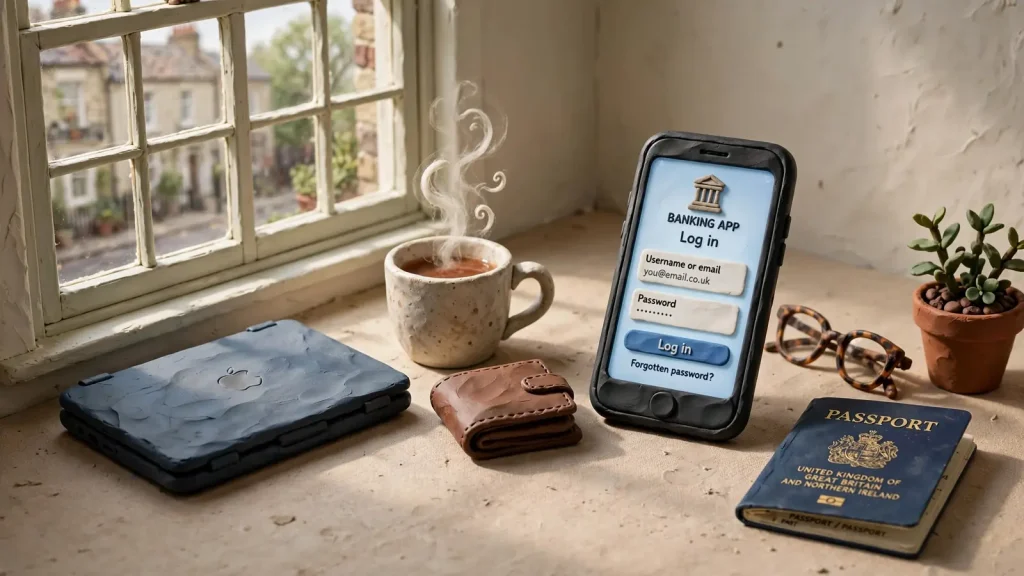
Direct banking can mean Open Banking or a bank transfer, with different authorisation and processing routes at UK casino cashiers.
What “Direct Banking” Means at a UK Casino
“Direct banking” is a payment description rather than the name of one universal product. At a UK casino, it generally points to a route that connects the casino payment to your bank account, rather than requiring a separate prepaid balance or e-wallet account. The wording can therefore cover more than one banking-based option, so the cashier’s exact label matters.
Two terms commonly appear in this context:
- Open Banking connects a payment request to your bank through an authorised banking service.
- Bank transfer sends funds from your bank account using the details supplied by the casino or its payment provider.
Both are bank-based routes, but they are not automatically identical in how the transaction is authorised, displayed or processed. Calling a site a UK direct-banking casino does not, by itself, tell you which route is available. You need to open the cashier and identify the named method before treating it as an option.
This also separates direct banking from other payment categories. A debit card is linked to a bank account, but a card transaction is still a card payment rather than a direct bank-account payment. UK casinos commonly list Visa and Mastercard debit cards separately from bank transfer options. Credit-card payments for gambling are not permitted at UK-licensed casinos.
An e-wallet, such as PayPal, Skrill or Neteller, holds or routes money through a separate payment account. It may be funded from a bank account, but that does not make the casino transaction a direct-banking payment. Paysafecard is different again: it is a prepaid voucher and is deposit-only. Some payment pages also display cryptocurrencies, which are not bank-account routes.
A specialist review may group bank transfer and Open Banking under a broad “direct banking” heading while listing cards, wallets and cryptocurrencies alongside them. That grouping can be useful for orientation, but it should not replace the casino’s own cashier information. Payment availability can differ between operators and can change over time.
For a precise reading, treat “direct banking” as a category label. Then check whether the particular casino offers Open Banking, a bank transfer, or both, and whether the displayed route is available for the transaction you intend to make. This avoids assuming that a casino described as a direct-banking site supports every bank-connected method, or that a card and an account-to-account payment work in the same way.
UK TRON Casino Comparison: TRX Rules and Payments · Casinos That Accept Boku in the UK: Payment Guide
How Open Banking Payments Move Between Your Bank and a Casino
Open Banking is a bank-connected payment route. Instead of entering card details or loading a separate electronic wallet, you begin the transaction at the casino cashier and use your bank account as the funding source. The casino, its payment provider and your bank each perform a different part of the process.
The cashier first presents the available banking option. The exact label can differ between operators, but the purpose is the same: to start a payment instruction linked to your bank account. You select your bank and are then taken through the bank’s own authorisation process. That may involve the bank’s app, online banking environment or another security step that your bank uses to confirm the instruction.
The important distinction is between authorising a payment and giving the casino direct control of your account. The transaction is initiated through an approved banking connection, while your bank remains responsible for confirming that the instruction can proceed. The casino receives the payment result through the payment chain and can then match the transaction to your gambling account.
At a high level, the movement looks like this:
- You choose Open Banking in the casino cashier.
- The payment flow identifies your bank.
- You authenticate with the bank and approve the instruction.
- The bank and payment service process the request.
- The casino receives confirmation and associates the funds with your account.
This route is different from a bank transfer that you arrange independently using manually entered recipient details. With Open Banking, the payment begins inside the casino’s payment flow and is connected to the selected bank during authorisation. A conventional transfer can require you to copy account information and set up the payment separately. Both routes use banking infrastructure, but the user journey and the way the transaction is matched to the casino account are different.
The same principle applies when money moves in the opposite direction. A withdrawal request is created in the casino account, and the payment route is used to send funds towards the bank account connected with the transaction. The casino’s system must identify the destination and associate it with the customer account before the payment can be completed. Open Banking should therefore be understood as a connection between account records and payment instructions, not merely as a button labelled “bank transfer”.
Open Banking and bank transfers are reported to potentially provide instant deposits and fast withdrawals at many sites, though this depends on the specific casino and bank setup.
A specialist review describes Open Banking and bank transfers as routes that can provide instant deposits and fast withdrawals at many sites. That is a description of reported availability, not a fixed property of every casino or every bank. The route still depends on the casino’s payment arrangements, the bank connection and the transaction being accepted. The word “instant” should therefore be read as a statement about how the payment may be credited in a particular setup, rather than a promise that every transaction will behave identically.
Account identity is another part of the mechanism. Using casino account information and a bank payment route that belong to the same customer reduces the possibility that basic ownership details will create avoidable friction. If the account holder, bank details or transaction information do not align, the casino may need to resolve that mismatch before treating the payment as complete. This is not a feature unique to a particular banking brand; it follows from the need to connect the payment with the correct gambling account.
Casinos That Accept Bitcoin in the UK: Payment Checks
For that reason, Open Banking is best viewed as a controlled hand-off: the casino requests a payment, your bank authenticates and processes the instruction, and the casino receives the resulting status. Understanding those separate roles makes it easier to distinguish the banking connection itself from later questions about available methods, transaction conditions or account handling.
Using Open Banking at Online Casinos in the UK
Open Banking at a UK online casino is best understood as a payment route that connects the casino cashier with a bank account in your name. The practical question is not simply whether a casino advertises Open Banking. You need to establish what the route can do at that particular cashier: whether it accepts deposits, whether it supports withdrawals, which bank accounts can be connected, and what account checks apply before funds can be used.
The process starts inside the casino account. After selecting Open Banking, you are normally directed to choose your bank and authorise the payment through the bank’s own secure process. The casino does not need you to type card details into its cashier. Instead, the transaction is approved through the bank connection. Once the authorisation is complete, the cashier records the result and applies the payment to the gambling account if the transaction is accepted.
Account requirements
Even with successful bank authorisation, you must still meet the casino’s specific account conditions, such as being aged 18 or over and passing required KYC identity and ownership checks.
That does not remove the casino’s own account requirements. A remote gambling licensee must establish that you are aged 18 or over before allowing a deposit. The operator may also require KYC checks, including confirmation of identity and ownership details. These checks are separate from the bank’s authorisation. A successful bank approval therefore does not mean that every casino account condition has been completed.
What to check before selecting Open Banking
Look at the cashier while logged in rather than relying only on a general payment-method page. Payment options can depend on the casino, your account, the bank you use and the type of transaction. A route displayed for deposits may not be enabled for withdrawals. Conversely, a casino may ask you to use another bank-based route when returning funds.
Check the following points before sending money:
- whether Open Banking is visible in the deposit cashier;
- whether your bank appears among the available institutions;
- whether the same route is offered in the withdrawal area;
- whether the casino requires your bank account to be in your own name;
- whether the account currency shown by the casino matches the currency you intend to use;
- whether the payment method has separate terms from the casino’s general banking terms.
The account currency matters because a mismatch can introduce conversion between the bank and the casino account. Confirm the currency before the first transaction, particularly if your bank account is not held in pounds sterling.
Your bank account and casino account should also describe the same customer. Using one named account consistently for both funding and receiving money is often the cleanest arrangement. It gives the casino a straightforward ownership trail and reduces the chance that a basic mismatch creates extra questions about a transaction.
Depositing through an Open Banking route
Once the route is selected, enter the required deposit amount in the casino cashier and follow the bank-authorisation steps. Review the payment details before approving them. The name of the recipient, the amount and the account being used should be clear. Do not approve a request that does not match the transaction you intended to make.
A deposit can be declined even when the bank account is active. Possible causes include an unsupported bank, an account-name mismatch, a failed bank authorisation or a casino-side account restriction. If the cashier does not confirm the transaction, do not assume that the funds have been credited. Check the casino balance and the bank transaction record before trying again, so that you do not create duplicate payment attempts.
The first deposit also sits alongside the casino’s safer-gambling controls. New customers must be prompted to set a financial limit before making that first deposit, and the account must provide accessible controls for changing or reviewing limits. Treat those controls as part of the payment setup, not as an optional feature to investigate later.
Payments & Withdrawals at UK Online Casinos
Open Banking is not a way around restrictions on credit-card payments for gambling. UK-licensed casinos cannot accept credit cards for this purpose, including credit-card funding routed through a money service business. A bank connection must therefore involve a permitted source of funds. The same principle applies to digital wallets: a remote gambling licensee cannot accept a wallet payment where that wallet allows credit-card funds to be used for gambling.
Withdrawals and the return route
A withdrawal begins in the casino account, not in the banking authorisation screen. Select the available withdrawal method and enter the amount shown as eligible for withdrawal. If Open Banking is offered for payouts, the casino may use the bank details associated with the earlier deposit or request a bank account to be confirmed.
The fact that a casino accepts Open Banking for deposits does not establish that it will send withdrawals through the same route. Payment availability is transaction-specific. Read the cashier instructions and the operator’s payment terms before assuming that an Open Banking deposit creates an Open Banking payout option.
UK anti-money-laundering controls commonly direct casinos to return funds to the original payment source. This is why using a single named bank account for deposits and withdrawals can make the transaction history easier to reconcile. If you request payment to a different account, the casino may ask for additional ownership evidence or direct the funds back through the original route.
Withdrawal approval can also involve KYC. The casino may need to complete identity or ownership checks before releasing the money, especially where the account has not yet passed those checks. The bank authorisation itself does not replace this review. A withdrawal can therefore remain pending even though the bank account was successfully connected during the deposit.
Deposit Checklist
- Verify Open Banking is visible in the deposit cashier
- Confirm your bank is among the available institutions
- Ensure the bank account is in your own name
- Match the account currency with your intended currency
- Check for any specific terms regarding the payment method
For a casino that accepts Open Banking in the UK, assess the entire path rather than one button in the cashier: account registration, age checks, financial-limit setup, deposit authorisation, balance confirmation, withdrawal availability and ownership verification. Open Banking can be a direct way to connect a casino account with your bank, but the usable route is the one that works for both sides of the transaction and complies with the account’s payment controls.
Direct-Banking Deposits: Timing, Bonuses and Minimums
When you fund a UK casino account through Open Banking, three separate checks matter: whether the deposit is credited promptly, whether the payment method qualifies for the advertised promotion, and what minimum amount the cashier accepts. These conditions can differ between remote gambling licensees, so the payment page is more reliable than a general method list.
How quickly an Open Banking deposit may arrive
Open Banking can connect the casino cashier to your bank and send the payment for authorisation through your banking service. A specialist review reports that Open Banking and bank-transfer routes can provide instant deposits at many sites. Treat that as a property to confirm for the particular casino rather than as a guaranteed result for every transaction.
The payment may still pause if the bank requires additional authentication, the casino has not matched the payment to your account, or the cashier displays the transaction as pending. A successful bank authorisation is not necessarily the same as the casino balance already showing the funds. Before trying again, check the account balance and transaction history; submitting a second payment could create two deposits if the first is merely being processed.
Casinos That Accept Dogecoin in the UK: What to Check
The selected bank account should belong to you and match the customer details held by the casino. A mismatch can lead to questions about ownership before the deposit is made available. Age verification also has to be completed before a remote gambling operator allows you to deposit.
Does the payment method qualify for a bonus?
A deposit promotion normally has its own payment-method conditions. The offer may require a qualifying deposit through a route named in the terms, while another route may be excluded. Read the promotion before authorising the payment, looking specifically for references to Open Banking, bank transfer, debit cards, e-wallets and other cashier options.
Do not confuse a deposit bonus with an Open Banking no-deposit bonus. A deposit offer requires money to be added through an eligible method. A no-deposit offer, if an operator advertises one, does not use the same qualifying action. The phrase “no-deposit bonus” therefore does not prove that Open Banking is accepted, that a deposit is unnecessary in every circumstance, or that the promotion is available to every new customer.
The terms can also define what counts as a qualifying deposit, when the promotional credit is added and which payment methods are excluded. A specialist review states that PayPal may be excluded from bonus eligibility, but that observation should not be treated as a fixed rule for all casinos or all offers. The operator’s current promotion terms control the result.
If the cashier shows an Open Banking route but the bonus terms mention only selected methods, contact the operator before depositing. Keep the confirmation of the offer and the payment receipt. This gives you a clear record of the method selected and the conditions displayed when you funded the account.
Attention A deposit bonus may exclude certain payment methods. Always check the specific promotion terms to ensure your chosen route, such as Open Banking, is eligible.
Minimum deposit for direct banking
The minimum is set by the casino and can vary with the payment method. A specialist review places the starting point for many casino deposits at £10–£20, depending on the selected route. That is a guide to the range reported by that type of source, not a universal Open Banking rule.
Check the amount shown in the cashier after selecting Open Banking. The displayed minimum may differ from the figure shown on a welcome-offer page, and a promotion may impose its own qualifying amount. If you deposit below that promotional threshold, the payment may reach the casino account without activating the offer.
Before confirming, review the final screen for the selected bank, amount, currency, any promotion indicator and the account receiving the funds. UK-licensed casinos cannot accept credit-card payments for gambling, including credit-card funding routed through a money service business. Use an eligible bank account and do not assume that a card-funded wallet is an acceptable substitute for direct banking.
How to Compare Casinos That Accept Open Banking
A useful comparison starts with the transaction itself, not with a label such as “best” or “instant”. Two casinos may both display an Open Banking option while presenting different charges, currency settings and account conditions. Check each cashier and payment page at the point where you would actually deposit, because the relevant cost is the cost of your transaction in that account.
Compare the complete cost
Do not look only for a casino fee. The amount leaving your bank account can be affected by several separate charges:
- a fee applied by the casino;
- a charge from the payment provider;
- an issuer or bank fee;
- a currency-conversion spread;
- a network cost.
The absence of a visible charge does not prove that the route is free. A conversion spread can cost more than a flat fee, particularly when the casino account and your bank account use different currencies. A specialist review has reported that GBP is supported on the relevant casino pages, but you should confirm that the account is actually denominated in GBP before the first transaction. That check helps prevent a payment being converted when you expected a sterling transaction.
Compare the final amount, not just the advertised percentage or fee label. For a deposit, establish how much reaches the casino balance and how much leaves your bank account. For a withdrawal, establish whether the amount shown in the cashier is the amount you will receive after any applicable deductions. The lowest-cost route cannot be identified universally: the result depends on the casino, provider, currency and amount involved.
Examine the conditions beside the payment button
Read the cashier wording rather than relying on a general payment-method logo. Check whether the Open Banking route is offered to your account, whether the transaction is handled in GBP, and whether any fee appears before confirmation. The same method name can lead to different terms at different casinos.
Casinos That Accept Diners Club in the UK
Promotional conditions also belong in the comparison. A payment route may be available while a particular offer excludes it. Treat the bonus terms and the payment terms as separate documents: first establish what the transaction costs, then establish whether the promotion recognises that route. This avoids choosing a casino because of a headline offer that does not apply to the way you intend to fund the account.
Check that the casino itself is legitimate
Payment convenience is not a substitute for regulatory checks. A remote gambling licensee serving the British market must hold the relevant UK Gambling Commission licence. Verify the licence number on the Commission’s public register before depositing, rather than relying solely on a badge displayed on the casino website.
Also check that the account holder’s details match the details used for the payment. Matching information reduces the chance that basic ownership checks interrupt the transaction. The casino may still request KYC, but inconsistent names or account information create an avoidable problem when the payment is reviewed.
DO
- Verify the UK Gambling Commission licence number
- Match your bank account details to your casino account
- Use the same named account for both deposits and withdrawals
DON’T
- Rely solely on website badges for legitimacy
- Use inconsistent names between your bank and casino accounts
- Assume a deposit method is automatically available for withdrawals
Build a like-for-like comparison
Use the same intended currency and transaction amount when comparing sites. Record the displayed casino fee, the provider charge, the exchange rate or conversion wording, and the amount credited or payable. Then note whether the payment conditions are clear and whether the route is available for the transaction you plan to make.
This method is more reliable than choosing a site described as a leading Open Banking casino. It tests the actual price and conditions that apply to you, while leaving promotional language out of the calculation.
Recommended online casinos
- JetsetspinsBonus: 200% Bonus + 100 Free Spins + Free Royal Wheel · Payout speed: 1-3 business days
- WinBeastBonus: €5000 + 500 FS + €650 Freebet · Payout speed: 1-3 business days
- BritsinoBonus: Welcome Package – Get your £2,200 + 2,000 FS · Payout speed: 1-3 business days
- BeOnBetBonus: 100% up to €500 + 100 FS · Payout speed: 1-3 business days
- ChanzeBonus: Slots Welcome Bonus #1 200% up to €500 · Payout speed: 1-3 business days
- SpinFormulaBonus: 550% Up To £15,000 + 550 FS · Payout speed: 1-3 business days
- x3betBonus: Welcome Pack 100% Up to £1.000 + 200 Free Spins · Payout speed: 1-3 business days
- AmunbetBonus: Join now and get 450% up to 2,700 GBP + 450 FS · Payout speed: 1-3 business days
- SlotoSportBonus: 500% up to £ 10 200+ 777 FS · Payout speed: 1-3 business days
Payment Methods, Availability and Account Compatibility
A payment method shown on a casino’s website is not automatically available for every customer or every type of transaction. Availability can depend on the cashier, your bank, the payment product you hold and whether the method supports deposits, withdrawals or deposits only. Treat the cashier displayed after signing in as the practical reference, rather than relying on a general payment-method page.
Casinos That Accept eChecks in the UK
For a UK Open Banking casino payment method, check that your bank appears in the provider’s selection screen. A bank account may be compatible with one instant banking service but unavailable through another. The account name and customer details should also match the gambling account. Using payment credentials belonging to someone else can create ownership questions and interrupt the transaction.
The same check applies when comparing wider payment options:
- Debit cards: Visa and Mastercard debit cards are commonly accepted by UK casinos. Confirm that your particular card is eligible and that the cashier accepts it for the transaction you intend to make. Credit-card payments for gambling are not permitted at UK-licensed casinos.
- Apple Pay: Some UKGC-licensed casinos offer Apple Pay for deposits. Its presence in a general list does not confirm that it is enabled for your account, device or intended transaction.
- Open Banking: Look for the bank connection offered in the cashier and confirm whether the displayed route is available for the direction of payment you need. Do not assume that an instant deposit route also provides an instant withdrawal route.
- Other e-wallets and vouchers: Availability is operator-specific. Paysafecard is deposit-only, so it cannot serve as a complete deposit-and-withdrawal route.
A specialist review may list Visa, Mastercard and other methods for the sites it examines, but current UK availability and card-product eligibility still need to be checked inside the cashier. Payment pages can change, and a method may be removed, restricted to particular currencies or limited to one transaction direction.
Before confirming an Open Banking deposit or any alternative, check four details: the payment brand, the account or card type accepted, whether it covers deposits or withdrawals, and whether the method is enabled after login. This prevents choosing an apparently suitable payment route that your bank, wallet or casino account cannot use.
Direct-Banking Deposits and Payment Limits
A direct-banking deposit is subject to more than the balance available in your bank account. The casino may apply its own deposit controls, while the selected banking route can impose separate restrictions. Your account status can affect the result as well. This means a payment may be refused even when the requested amount appears affordable.
Maximum deposit limits can be set:
- for one transaction;
- across a day; or
- across a month.
The applicable ceiling may differ between Open Banking, bank transfer, debit card and e-wallet options. It can also change according to account status. A new or partially checked account may not have the same allowance as an account whose required checks are complete. A specialist review describes these limits as dependent on both the payment method and the customer account, so treat the cashier display and account terms as the controlling information for the direct banking casino site you use.
There is also a separate financial-limit requirement. Before accepting a new customer’s first deposit, a remote gambling licensee must prompt that customer to set a financial limit. This limit is an account-level control, not simply a restriction attached to one bank connection. It is intended to define how much money you can deposit within the period selected in the account settings.
After the initial deposit, the control should remain accessible from the account interface. Check it before starting a direct-banking casino deposit, particularly if you have changed payment methods or your account status has changed. The payment route may have a transaction ceiling, while your personal financial limit may be lower. In that situation, the lower restriction determines what you can submit.
Financial limits can be applied per transaction, per day, or per month. These limits may differ between Open Banking and other payment methods like e-wallets.
Do not confuse a rejected payment with a banking failure. The cause may be the route’s maximum, the casino’s account-level threshold, a financial limit already reached, or an account-status restriction. Reading the cashier information before confirming the amount helps identify which control applies. It also prevents switching between direct banking casino deposits simply because one route rejected a request that exceeded its own limit.
Why Casino Withdrawals May Take Longer Than Deposits
A direct-banking casino withdrawal has an extra decision point that a deposit does not: the casino must approve the payout before the payment provider or bank can deliver it. A deposit may be authorised as soon as the payment route confirms the transaction. A withdrawal, by contrast, can remain pending while the remote gambling licensee checks the request and the account.
A specialist review describes internal approval as part of the stated withdrawal processing time. This means that a displayed estimate should not be read as the time taken by the bank alone. The casino’s own review queue is part of the process, and its decision must come first.
Why the first payout can be slower
The first direct-banking casino withdrawal may involve account verification that has not yet been completed. The casino may need to establish that the account is fully verified before releasing funds. If this check has not finished, the withdrawal can wait even when the selected banking route is capable of moving money quickly.
A specialist review also identifies account verification and the casino’s internal approval procedure as factors in withdrawal speed. These are separate stages: a payment route can be technically fast, while the account remains subject to checks before the transaction is authorised.
You should therefore distinguish between:
- Casino processing — the withdrawal is reviewed and approved.
- Account verification — the casino confirms that the account meets its requirements.
- Payment delivery — the approved funds are sent through the selected banking route.
The phrase “instant banking withdrawal” can describe the payment stage, not necessarily the complete period from submitting the request to receiving the money. An Open Banking route may support a fast withdrawal once the casino has approved it, but it cannot remove an unfinished verification step or shorten the casino’s internal review automatically.
For a direct banking casino withdrawal in the UK, check whether the published timing refers to approval, payment delivery, or the whole withdrawal process. That distinction gives a more accurate expectation than treating every fast withdrawal Open Banking casino claim as a promise of immediate receipt.
Keeping Deposits and Withdrawals on a Consistent Payment Route
A casino that accepts direct banking may treat the bank account used for a deposit as the primary destination for any later return of funds. This is not merely a technical preference. UK anti-money laundering rules generally require payouts to go back to the original payment source, helping the remote gambling licensee keep the movement of funds connected to the customer who made the deposit.
Consistent Payment Routes
Using a single named bank account for both deposits and withdrawals is the most efficient way to comply with anti-money laundering controls and reduce verification friction.
This arrangement is often described as a closed-loop process. You fund the gambling account from a payment source held in your name, and the casino attempts to send the relevant funds back through that same route. The exact process depends on the cashier and the payment provider, so the available withdrawal option should be checked before depositing.
Consistency reduces avoidable checks. Use account information that belongs to you, and make sure the name and other ownership details match between your casino account and the bank-connected payment route. A mismatch can make it harder for the casino to establish that the deposit and withdrawal involve the same customer.
Do not assume that a different bank account or payment method will be accepted simply because it appears in the cashier. Returning money to another source may require additional verification, particularly where the casino cannot establish a clear connection with the original deposit. That can create extra administrative steps without changing the underlying withdrawal request.
For an online casino accepting instant banking, the cleanest approach is therefore to use one named account consistently for deposits and withdrawals. Before confirming a deposit, check which source the casino records and whether that source can also receive the return of funds.
Open Banking Costs and What Can Change the Total
The amount shown in an Open Banking cashier is not necessarily the full cost of a casino payment. The final amount can be affected by several parties: the casino, the payment provider, your bank or card issuer, the currency-conversion service and, in some cases, the payment network. A proper comparison therefore looks beyond a single label such as “fee-free”.
Casinos That Accept Litecoin in the UK: What to Check
The main cost layers
A casino may apply its own charge to a deposit or withdrawal. This can appear as a fixed fee, a percentage of the transaction, or a condition attached to a particular payment route. The charge may be displayed in the cashier before you confirm the payment, but its presence and value depend on the operator, the account and the selected method.
The Open Banking provider can also have its own pricing. The service connecting the casino with your bank may pass on a transaction charge or include its cost in the amount presented for authorisation. You should distinguish between the amount leaving your bank account and the amount credited to the casino balance. If they differ, the cashier should explain whether the difference is a fee or a currency adjustment.
Your bank may create another cost. This is particularly relevant when the account is not held in the same currency as the casino balance. The bank can apply its own exchange rate, conversion charge or account-level fee. A payment may therefore be described as having no casino fee while still costing more than the amount you expected when your bank processes it.
Network fees can form another part of the total, depending on how the payment is routed. They are separate from the casino’s pricing and may not be shown in the same place. A visible charge in the cashier is consequently only one part of the transaction unless the payment is made and settled entirely in the same currency with no additional provider or bank costs.
Casino Fee
Any direct charge applied by the operator to the transaction.
Provider Fee
A charge from the service connecting the casino and your bank.
Bank Fee
Costs from your issuer, such as conversion charges or account fees.
Conversion Spread
The margin included in the exchange rate when using different currencies.
A specialist review identifies this wider group of possible charges as including casino fees, provider fees, issuer or bank fees, exchange-rate spread and network costs. Treat that as a checklist for examining a transaction, not as proof that every fee applies to every Open Banking payment.
Why currency matters
Currency conversion changes the calculation even when the casino does not add a separate charge. Suppose your bank account is in pounds but the gambling account is denominated in another currency. The payment must be converted at some point. The conversion may be handled by the casino, the Open Banking provider or your bank, depending on the payment structure.
The important figure is the rate actually used, not only the name of the currency displayed on the cashier. A provider can build a margin into its exchange rate rather than showing a separate fee. This margin is known as the exchange-rate spread. It reduces the value you receive when converting from one currency to another.
A specialist review notes that this spread can cost more than a clearly displayed flat fee. That is why comparing only the line marked “transaction fee” can produce the wrong result. A route with no visible charge may still result in a higher cost if its exchange rate is less favourable. Conversely, a route showing a small fixed charge may produce a clearer total when the currency conversion is handled at a better rate.
Casinos That Accept Wirecard in the UK
For a UK account, confirm that the casino account is set to GBP before making the first transaction. The payment page may present a pound symbol while another currency is used for the underlying account or settlement. The currency shown in the cashier, the currency of your bank account and the currency recorded for your casino balance should be understood before authorisation.
Deposits and withdrawals are not identical
The cost calculation can differ according to whether money is moving into the casino or out of it. A deposit may show the amount to be credited, while a withdrawal may show the amount requested before any provider or bank conversion occurs. Do not assume that the same route applies the same pricing in both directions.
The payment route should also be checked for the transaction you intend to make. A method displayed in a casino’s payment area may be available for deposits without being available for withdrawals, or the reverse. Even when both directions are supported, the parties handling the payment can differ, so the resulting exchange rate or fee may not be identical.
This is relevant when comparing Open Banking casinos in the UK. The useful comparison is not simply whether a casino accepts a bank-connected payment. Examine the amount requested, the amount credited or received, the currency used, the fee displayed by the casino and any information provided by the payment provider or bank.
A practical cost check
Before confirming a payment, record four values:
- the amount you intend to send or receive;
- the currency of the casino account;
- the amount the cashier says will be credited or paid;
- any fee or exchange-rate information shown before authorisation.
Then compare the result with the amount that will actually leave or reach your bank account. If the transaction crosses currencies, include the conversion rate in the comparison. If the casino account and bank account both use GBP, a currency spread should not be part of that particular conversion, although other casino, provider or bank charges may still apply.
Do not treat “no fee” as a complete cost statement. It may refer only to the casino’s own charge and say nothing about the payment provider, bank or exchange rate. The absence of a separate fee is useful information, but it does not establish that the route is the least expensive for your transaction.
The same principle applies to online casinos that accept Open Banking: compare the complete movement of money, not just the payment button or the first fee displayed. Costs depend on the actual amount, currency and route selected, so there is no universal lowest-cost method. A sound comparison includes casino charges, provider pricing, bank or issuer costs, conversion spread and any network fee that forms part of the transaction.
Why must withdrawals return to the deposit method?
Returning funds to the original payment source is a common anti-fraud and anti-money-laundering control. Using the same account for deposits and withdrawals can also reduce ownership checks and other transaction delays.
What is the fastest withdrawal method for UK casinos?
PayPal, Open Banking services and debit cards linked to fast payout systems are generally among the quickest options. The casino’s approval process and your verification status also affect how quickly you receive funds.
Can I use a credit card at 333 Casino in Great Britain?
No. Credit-card gambling is banned at UK-licensed casinos, and that rule has not been relaxed.
Is Skrill available?
Yes, Skrill is available at some UK-friendly casino sites and remains a common deposit method. It may be excluded from promotions.
Do UK casino withdrawals require verification?
Verification may be needed before a withdrawal is completed, particularly for a first withdrawal. Completing verification can help avoid delays.
Why can a fast payout casino still delay my withdrawal?
A casino must approve the withdrawal internally, and verification may take longer for a first payout. Your account’s verification status affects the overall time.